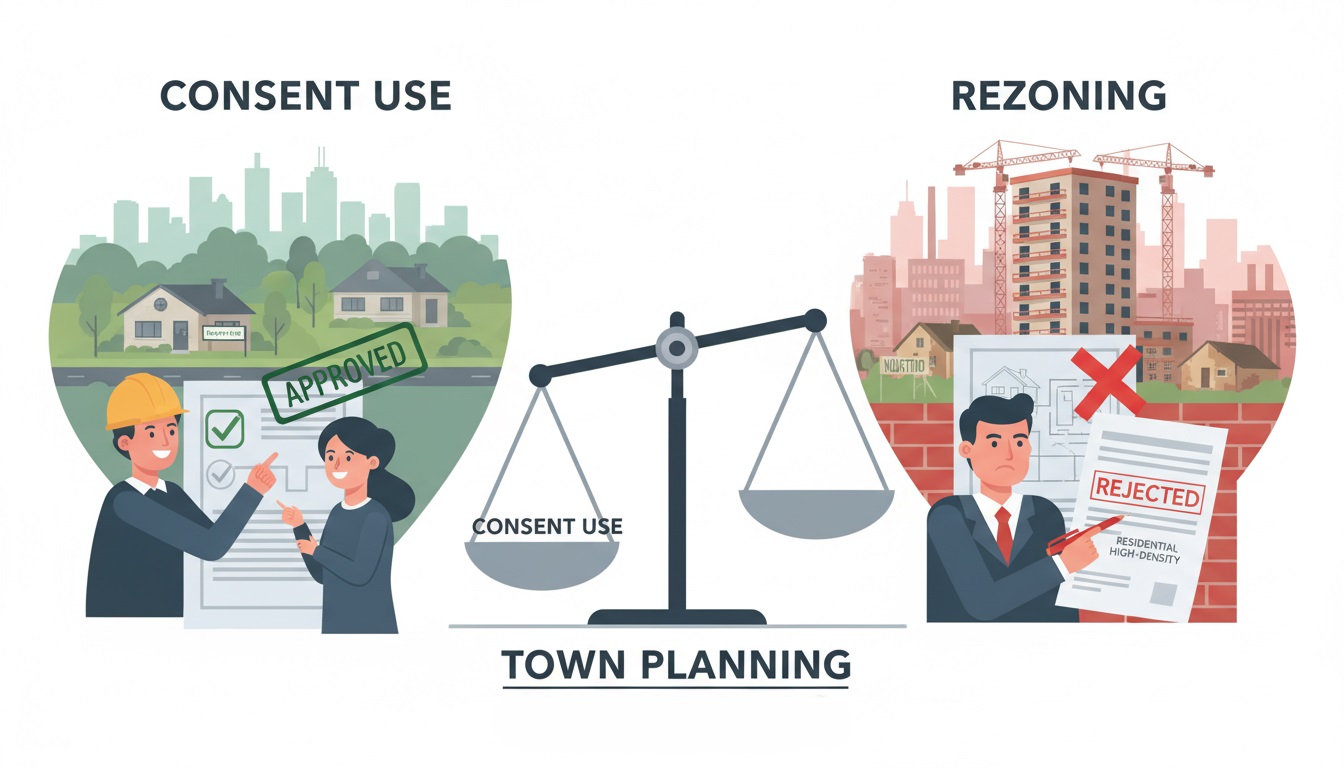
Consent Use vs Rezoning Johannesburg: Town Planning Guide
Navigating property development in Johannesburg requires a deep understanding of town planning regulations. Property owners often face a critical choice: applying for consent use vs rezoning Johannesburg. Both processes allow for changes to how land is used. However, they differ significantly in scope, complexity, and impact. Knowing which path to take is vital for successful development. This guide will clarify these two essential town planning tools.
Understanding Consent Use in Johannesburg
Consent use, also known as special consent or conditional use, allows for a specific deviation from existing zoning. It permits a particular land use that is not the primary purpose of the zone. This is typically for uses compatible with the surrounding area. For instance, a small home office in a residential zone might qualify. The existing zoning remains unchanged. This makes consent use a less drastic alteration. It is often quicker and less costly than rezoning. Municipalities grant consent use for specific periods or under certain conditions. These conditions ensure minimal negative impact on neighbors and the environment.
The Consent Use Process
The application process for consent use is generally straightforward. Applicants must submit detailed plans and motivations to the local municipality. These documents explain the proposed use and its impact. Public notification is usually required. This allows neighbors and interested parties to raise objections or support. The municipality then reviews the application. They consider factors like traffic impact, noise, and visual aesthetics. If approved, the consent use is granted with specific conditions. These conditions might relate to operating hours, parking, or building modifications. It is a flexible tool for minor land use adjustments.
What is Rezoning in Johannesburg?
Rezoning involves a fundamental change to the official land use rights of a property. It alters the primary zoning designation. For example, changing a residential property to a business or industrial zone. This is a more permanent and significant alteration than consent use. Rezoning reflects a change in the long-term planning vision for an area. It opens up a broader range of potential uses for the property. This process is often necessary for large-scale developments. Think of new commercial centers or high-density housing projects. The impact of rezoning is far-reaching. It can affect property values and infrastructure demands.
The Rezoning Application Process
Applying for rezoning is a complex and lengthy procedure. It involves extensive documentation and public participation. Applicants must submit a detailed application to the municipality. This includes land use maps, impact assessments, and development proposals. A crucial step is public advertising. This informs the community about the proposed change. Interested parties can then submit objections or comments. The municipal planning department evaluates the application thoroughly. They consider the area’s spatial development framework and infrastructure capacity. The process often involves multiple departmental approvals and council meetings. The costs associated with rezoning can also be substantial. To understand more about the financial aspects, you might want to explore our guide on Rezoning Application Cost South Africa Guide.
Consent Use vs Rezoning Johannesburg: Key Differences
The core difference lies in the permanence and scope of the change. Consent use is a temporary or conditional allowance. It permits a specific use within an existing zone. The underlying zoning remains unchanged. Rezoning, conversely, permanently alters the land’s zoning designation. It redefines what the property can be used for entirely. Consent use is suitable for minor deviations. Rezoning is for fundamental shifts in land functionality. Consider the example of a doctor’s practice. A consent use might allow it in a residential area. Rezoning would be needed to turn a residential plot into a full commercial medical center. The implications for future development are distinct. Consent use offers flexibility without changing the long-term plan. Rezoning establishes a new long-term plan for the property.
When to Choose Consent Use
Choose consent use when your proposed activity is minor. It should be generally compatible with the current zoning. Examples include guesthouses, small offices, or crèches in residential areas. The key is that the primary character of the neighborhood should not drastically change. This route is typically faster and less expensive. It is ideal for specific, limited operations. It preserves the original zoning rights. This can be beneficial for future resale. It also avoids the extensive public scrutiny often associated with rezoning. Always consult with Glensburg town planners to confirm suitability.
When to Opt for Rezoning
Rezoning is necessary for significant changes in land use. This includes converting residential land to commercial, industrial, or higher-density residential. If your proposed development fundamentally alters the area’s character, rezoning is your path. Examples include shopping malls, large apartment blocks, or factories. It is a more involved process. It requires careful planning and extensive documentation. However, it provides greater certainty and broader development rights. Rezoning unlocks the full development potential of a property. It aligns with long-term strategic plans. This makes it a powerful tool for substantial urban transformation.
The Role of Town Planning in Johannesburg
Town planning in Johannesburg ensures orderly urban development. It balances economic growth with environmental protection and social equity. Planners evaluate applications against municipal schemes and policies. These policies guide how land can be used. They address infrastructure, services, and community well-being. Both consent use and rezoning applications are critical tools. They allow the city to adapt to changing needs. They also maintain a structured approach to growth. Engaging with experienced town planners is crucial. They can navigate the complex regulatory landscape. Their expertise ensures compliance and increases approval chances. Understanding municipal bylaws is key to a smooth process.
Navigating Public Participation
Public participation is a cornerstone of town planning. It ensures transparency and community involvement. For both consent use and rezoning, neighbors and stakeholders can comment. Their input helps shape development outcomes. Addressing concerns proactively can streamline the process. Good communication with the community is vital. It builds trust and reduces potential disputes. Ignoring public input can lead to delays or even rejection. A well-prepared application anticipates community questions. It provides clear answers regarding potential impacts. This proactive approach is beneficial for all parties involved.
Why Expert Advice is Indispensable
The complexities of town planning in Johannesburg cannot be overstated. Laws, regulations, and policies are constantly evolving. A professional town planner offers invaluable guidance. They understand the nuances of local bylaws. They can prepare robust applications. Their expertise helps mitigate risks and avoid costly mistakes. From initial feasibility studies to final approval, a planner is your advocate. They ensure your project aligns with municipal requirements. This saves time and resources. Engaging an expert is an investment. It significantly increases the likelihood of a successful outcome for your property development aspirations.
In conclusion, choosing between consent use vs rezoning Johannesburg is a strategic decision. It depends on the nature and scale of your proposed development. Consent use offers flexibility for minor changes. Rezoning provides a permanent shift for major transformations. Both are integral to responsible urban growth. Always seek expert advice. This ensures your project complies with all regulations. It also helps achieve your development goals efficiently.